
Videos, guides and answers
Videos, guides and answers for Sparq homeowners and installers: answers to the questions we hear most.
Watch and learn
Educational content, installer guides, and product overviews.
 2:35
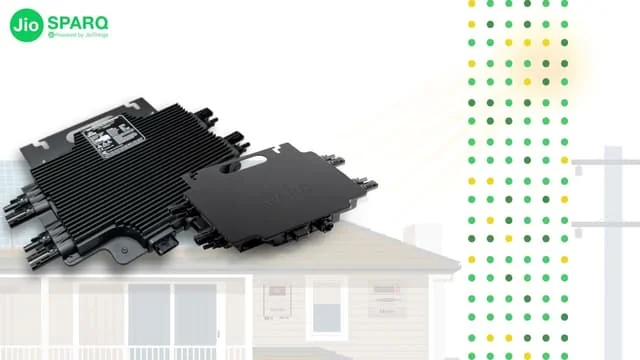
JioThings Sparq Microinverter OverviewJio Things · India
Jio Things' overview of the Jio SPARQ microinverter and how it differs from a string inverter.
 1:24
TSX Venture 50: Sparq SystemsTMX Group
TMX Group's profile of Sparq for the 2025 TSX Venture 50.
 2:53
CEO Interview - Market StrategySparq Systems
IDG interview: Dr. Praveen Jain on the Quad microinverter and where Sparq is headed.
 4:36
Quad2 Installation GuideSparq Systems
Installing a Quad2 on the Queen's University test roof, step by step.
 6:47
SparqLinq Installation GuideSparq Systems · India
Setting up SparqLinq and connecting it to SparqVu, India edition.
 1:00
Sparq Microinverter OverviewSparq Systems
A one-minute introduction to the Quad microinverter.
 1:31:13
SPRQF Stock - Chairman Interview with Ravi SoodBlaze Capital
Blaze Capital interview with Chairman Ravi Sood. Long-form.
 1:24:10
SPRQF Stock - CEO Interview with Dr. Praveen JainBlaze Capital
Blaze Capital interview with CEO Dr. Praveen Jain. Long-form.
 45:01
Energy Revolution - Sparq Systems CEO Interview with Dr. Praveen JainBlaze Capital
Blaze Capital's 2024 interview with Dr. Praveen Jain.
 4:45
How to install JioSparq MicroinvertersJIOSPARQ · India
JIOSPARQ's installation walkthrough, India.
 0:29
50kW RCP Three Phase C&I ProjectJIOSPARQ · India
A short clip of the Reliance Corporate Park carport install, India.
Background: solar and climate basics
 1:50
PV Systems 101Third-party video · Student Energy
Student Energy's primer on how solar PV turns sunlight into electricity.
 3:04
Global Warming 101Third-party video · National Geographic
National Geographic's primer on the causes and effects of global warming.
 3:38
Climate Change 101Third-party video · DJI Captures
A short film on climate change, by Philip Kapadia.
Size a real system
Estimate panel, inverter and gateway quantities within your AC capacity. Cabling, protection and installation hardware are quoted for the site layout.
Open the calculatorLegal documents
Important legal information for our products and services.
Governing the purchase of Sparq products and the use of its services, software and applications.
How Sparq collects, uses and discloses the personal information visitors provide.
Governance policies (disclosure, insider trading, charters) live in the governance library.
Questions and answers
PV systems, products, installation, monitoring and warranty, 68 product and install questions, and 11 for investors.
Solar at home
A typical home solar system includes the following:
- Solar Panels: Convert sunlight into direct current (DC) electricity
- Inverter (Micro or String): Converts DC electricity into alternating current (AC) for home use.
- Junction Box: A protective enclosure where electrical wires connect.
- Gateway (Monitoring Device): Communicates with inverters and lets homeowners track system performance.
- Disconnect Switch (AC/DC): Manually shuts down power during maintenance or emergencies.
- Trunk Cable: Main cable connecting multiple microinverters or panel circuits.
- Branch Cable: Secondary cable connecting panel groups to the trunk cable.
- Mounting Structure: Hardware used to securely fasten panels to the roof or ground.
- Battery (Optional): Stores excess energy for use at night or during outages.
System cost depends on size, equipment, labor, and region. Incentives like tax credits can significantly reduce the final price.
Most roofs are suitable if they're structurally sound, get enough sunlight, and have minimal shading. A professional assessment will confirm suitability.
Many homeowners lower their bills. Savings depend on system size, usage habits, and electricity rates.
Federal tax credits, local utility rebates, and renewable energy grants may be available. Check your local and national programs.
Several online tools can help you assess the feasibility, cost, and savings of a solar system for your home. Here's a short list of tools we find useful:
- Google Project Sunroof (https://sunroof.withgoogle.com/): Uses satellite imagery to analyze roof size, shading, and local climate.
- PVWatts Calculator (https://pvwatts.nrel.gov/): Offers a detailed estimate of system output based on location, system size, tilt, and more.
- EnergySage Solar Calculator (https://www.energysage.com/solar/calculator/): Estimates optimal system size, cost, and savings based on utility rates and location.
- Solar-Estimate (https://www.solar-estimate.org/): Provides system sizing, savings projections, and can match homeowners with installers.
A typical residential installation takes 1-3 days, but the full process - including design, permitting, and approvals - can take several weeks.
It is not required, but batteries store energy for backup and off-grid use. Without one, excess energy is sent to the grid.
Solar PV systems are generally low maintenance, but upkeep depends on the system type and the long-term reliability of its components. Panels may require occasional cleaning to remove dirt, dust, or debris, especially in dry or dusty areas. An annual inspection is recommended to check for issues with wiring, mounting hardware, or performance drops. One of the most common maintenance concerns involves the failure of electrolytic capacitors - key components in inverters - which typically have a lifespan of 10-12 years, depending on heat, usage, and environmental conditions. Choosing high-quality inverters and components can help minimize long-term maintenance needs and improve overall system reliability.
Typically, 25-30 years. Most come with performance warranties and degrade very slowly over time.
Yes. Owned solar systems can increase resale value and appeal to buyers. Leased systems may require transfer agreements.
You can transfer ownership of the solar system if it's leased or financed. Owned systems generally enhance property value.
The terms
A billing system that credits solar owners for excess electricity sent to the grid. These credits can offset your consumption at night or on cloudy days.
A Zero-Export Device ensures no electricity is exported to the grid from your PV system. It's used where utility regulations require solar systems to operate in zero-export mode.
A system that can function both with the grid (supplying/consuming power) and independently (during outages). A Sparq dual-mode system can keep powering local loads in an outage without a battery.
A technology in inverters that continuously adjusts electrical parameters to extract the maximum possible power from solar panels under varying sunlight conditions.
A safety mechanism that quickly shuts down power at the panel level during emergencies or for maintenance, meeting electrical code requirements.
Quad2
The status LED on the Q2000 will be flashing green when working correctly. If the LED is flashing Red, this indicates an AC issue so check the AC breaker. If the LED is amber, this indicates a ground fault was detected so check for faulty DC wiring then connect to the SparqLinq and go to the 'Settings->Inverter Management' page and click the Clear GFDI (blue lightning bolt) icon.
The Sparq Quad 2000 is a high-efficiency microinverter supporting up to four PV module inputs, each with independent MPPT. It simplifies wiring with a single AC trunk output. Its key features include dual-mode operation (grid-tied and off-grid), high power density, a modular design, and panel-level system monitoring via SparqVu and SparqSync.
Compatible systems include: Split-phase 120/240V, three-phase 120/208V, single-phase 230V, and three-phase Y-connected 230/400V with neutral.
The current Quad2 datasheets specify panels up to 680 Wp per channel, a full-power MPPT range of 34–45 V, an extended MPPT range of 20–60 V, and a maximum input DC current of 16 A per channel. Check the panel against the applicable grid-tied or dual-mode datasheet and installation manual before selecting modules. MPPT voltage is not an open-circuit voltage limit.
LEDs provide system feedback such as power-up status, grid connection, fault alerts, and communication signals. Please see the user manual for a full LED legend.
Yes, the Quad2000 integrates with SparqVu to provide panel-level performance tracking, remote diagnostics, and system alerts.
Yes. The Sparq app is available for iOS and Android for remote monitoring and notifications.
Firmware updates are automatic and over-the-air via the Sparq Gateway, provided the system is connected to the internet.
Yes. Off-grid mode is supported and can be enabled via the Sparq Gateway.
Yes. The Quad 2000 can support nonlinear loads, including single-phase water pumps.
Quad3
The Sparq Quad3 is a high-efficiency, native three-phase microinverter that supports up to four PV module inputs, each with independent MPPT. It also supports MPPT motor drive applications. Its key features include: Tri-mode operation (grid-tied, off-grid, MPPT motor drive), a modular design with automatic paralleling for high-power motor support, high power density, and panel-level monitoring.
The Quad3 supports 380 V, 400 V and 480 V line-to-line three-phase grids.
The current Quad3 datasheet lists a panel rating of 680+ Wp per channel, a full-power MPPT range of 34–45 V, an extended MPPT range of 20–59 V, and a maximum input DC current of 16 A per channel. Check all panel ratings against the datasheet and installation manual before selecting modules. MPPT voltage is not an open-circuit voltage limit.
LEDs provide system feedback such as power-up status, grid connection, fault alerts, and communication signals. Please see the user manual for a full LED legend.
Yes, the Quad3 integrates with SparqVu to provide panel-level performance tracking, remote diagnostics, and system alerts.
Yes, the Quad3 supports off-grid operation and MPPT motor drive applications. Off-grid mode can be enabled via the Sparq Gateway.
Yes. While the Quad3 features advanced protection mechanisms, proper grounding and surge protection are essential to safeguard the system from grid and environmental anomalies.
Yes, the Quad3 supports various three-phase water pumps, including Induction motor, Permanent Magnet Synchronous Motor (PMSM), and Brushless DC (BLDC) motor pumps.
A single Quad3 unit can support a water pump rated up to 3 hp. For higher-power motors, multiple units can be connected in parallel to meet the required load.
Yes, but with limitations. A single Quad3 will still cap its output at 3 hp. While it can power the motor, it will not reach full speed or torque, and performance will be reduced.
Absolutely. The Quad3 uses smart, sensorless control to safely limit output based on motor parameters like frequency and voltage, ensuring safe operation and protecting the motor from damage.
Monitoring
SparqLinq missing data may occur if the time and date was not restored correctly from an internet time server when the SparqLinq was last power cycled. This causes the data to be stored under the default date set in the SparqLinq, instead of under today's date. To check this, go to the 'Settings->Installation Information' page. At the bottom of the tab, the box titled 'Current Date and Time' will show something like '2025/05/30 12:55:44'. Look closely to see if it is correct. If it is wrong, edit to the correct time and date then press enter.
Plug the SparqLinq into an extension cord and move it to different locations (possibly outside or up on the roof) and try joining to the inverter using the 'Settings-Inverter Management' tab. It is important that the microinverter be first joined to the SparqLinq before it can start connecting to other inverters in a mesh network. Put the SparqLinq in a non-metallic weatherproof box on the roof to get it closer to the inverters. It may be necessary to use a second SparqLinq to connect the additional inverters. If the inverters have been joined to the first SparqLinq, you will need to go to its 'Settings-Inverter Management' tab and click on the 'X' in the Release column before the microinverters can be joined to a new SparqLinq. Two or more SparqLinqs can be monitored on the SparqVu website, but there is no function to allow pairing the sites together.
Try connecting to the SparqLinq Dashboard page and see if data is being logged. If so, power cycle the SparqLinq and then review the SparqVu site after about 10 mins. If there was several days of backlogged data, it may take a while for the data to be updated.
On the SparqLinq dashboard, click on the menu icon (three horizontal bars) in the top left corner of the dashboard page then select the SparqVu Token option. Enter the full email address that was used to create the SparqVu account and click "Generate Access Token" and copy the Project ID and Token values. Login to your SparqVu account and click the add a new site button, paste the project ID copied from the SparqLinq into the project ID field on SparqVu. Click the Go to Security Check button. Enter the Token copied from the SparqLinq and click Check Access Token. The SparqLinq should now be added to this SparqVu account.
Go to SparqVu.com and click on the Register tab. Under 'Register for A New Account' enter your email address and a password twice then click Register. Go to your email account and click the activate link.
One option is to have them connect to their router and look under the active devices to see the IP address the router assigned the SparqLinq. If you need to disconnect the SparqLinq from the customer’s Wi-Fi, use a paperclip to push the reset button on the side of the SparqLinq. This will reset the Wi-Fi mode in the SparqLinq so it will open an AP (Access Point) with these credentials:
SSID: SparqLinq
PWD: 'SparqLinq 80211'
On a Wi-Fi enabled laptop or phone, connect to this Wi-Fi AP and go to the dashboard by typing in the address http://192.168.111.1/
Plug the SparqLinq into an extension cord and move it to different locations (possibly outside or up on the roof) and try joining to the inverter using the 'Settings-Inverter Management' tab. It is important that the inverter be first joined to the SparqLinq before it can start connecting to other inverters in a mesh network. Put the SparqLinq in a non-metallic weatherproof box on the roof to get it closer to the inverters. It may be necessary to use a second SparqLinq to connect the additional inverters. If the inverters have been joined to the first SparqLinq, you will need to go to its 'Settings-Inverter Management' tab and click on the 'X' in the Release column before the inverters can be joined to a new SparqLinq. Two or more SparqLinqs can be monitored on the SparqVu website, but there is no function to allow pairing the sites together.
Carbon and pricing
Carbon intensity refers to the amount of carbon dioxide (CO2) emissions produced per unit of electricity generated. It is typically measured in grams of CO2 per kilowatt-hour (g CO2/kWh). The carbon intensity can vary depending on the energy mix used by your local electricity grid (e.g., coal, natural gas, nuclear, or renewable energy sources like wind or solar).
In the SPARQ User App, carbon intensity is used to calculate the reduction in CO2 emissions due to your solar plant. By producing your own solar energy, you reduce the need for electricity from the grid, thus lowering overall CO2 emissions. To accurately calculate this reduction, the app requires you to input the carbon intensity value for your region.
You can find the carbon intensity for your area by checking with your local electricity provider or using online resources that track carbon intensity by region.
Electricity unit price refers to the cost you pay per kilowatt-hour (kWh) of electricity consumed from the grid. This price can vary based on your electricity provider, the time of day, and the type of plan you're on (e.g., fixed, variable, or time-of-use pricing).
Installers
For professional installers, we find the following tools useful for design, modelling, and performance enhancement:
- HelioScope (https://helioscope.aurorasolar.com/): HelioScope streamlines commercial PV design with web-based 3D modeling and fast performance simulations.
- OpenSolar (https://www.opensolar.com/): OpenSolar offers free cloud-based tools for solar design, 3D modeling, and accurate energy estimates.
- PVsyst (https://www.pvsyst.com/): PVsyst provides detailed photovoltaic analysis with precise energy yield and system optimization tools.
Our microinverters supports up to four solar modules per unit, enabling a compact and efficient quad-input design that reduces the total number of inverters needed.
Yes. Sparq Systems provides a fully AC-based system, eliminating the need for high-voltage DC cabling. This simplifies installation and enhances installer and homeowner safety.
The SparqLinq gateway communicates wirelessly with the microinverters via Zigbee. It tracks the performance of every Quad on your roof, keeps your system's history on the device, and stores it long term in SparqVu, so you can see how your system has performed over the years.
Yes. Installers must ensure the system complies with local utility interconnection standards, which may involve site inspections, documentation, and system testing before final approval.
Each microinverter is mounted directly under the panel, connected via MC4 connectors, secured to the racking, and wired into the AC trunk cable. It integrates easily with standard mounting and wiring systems.
Yes. Sparq provides a Quick Installation Guide for the SparqLinq gateway that outlines setup, network configuration, and pairing with the microinverters.
Sparq offers technical documentation, product datasheets, and installation manuals on its website. For hands-on assistance, installers can also access training and technical support from Sparq's service team.
Installers can reach Sparq Systems at info@sparqsys.com for prompt technical assistance or warranty inquiries.
Yes. The Quad 2000 is inherently a rapid shutdown device, fully compliant with NEC 2020 requirements.
No. Each input operates independently. Unused inputs should be capped with the provided MC4 caps.
It depends on branch circuit current ratings and local electrical codes. Refer to the installation manual for exact limits.
Select modules using the current Quad2 datasheet: up to 680 Wp per channel, 34–45 V full-power MPPT, 20–60 V extended MPPT, and 16 A maximum input DC current per channel. Check the applicable grid-tied or dual-mode datasheet and installation manual for all module compatibility requirements.
The Q2000 microinverter has 4 independent inputs that are transformer isolated from the AC output and have their negative DC inputs referenced to ground thru the GFDI circuit. Considering the inverter handles each module individually, the calculations are below for the 64-200 (1):
• the rated operating current and voltage; this is the module maximum power current (Imp) and module maximum power voltage (Vmp).
• the maximum photovoltaic source circuit voltage; this is equal to the PV module’s open circuit voltage (Voc).
• the rated short-circuit current; this is equal to the PV module’s short circuit current (Isc).
The Trunk cable used with the Q2000 connects the AC output of all inverters in parallel. This means the voltage on the trunk cable remains the same (240Vac) but the current from each inverter (7.5 Amps) gets added. A trunk with 3 inverters connected to it will have 3 x 7.5A = 22.5A under full power. Adding a 1.25 safety factor gives a design current of 22.5 x 1.25 = 28.125A.
Yes. The Quad3 is inherently a rapid shutdown device and fully complies with NEC 2020 Section 690.12.
Warranty and service
Sparq offers a standard 12-year warranty, which can be extended up to 25 years. Installers should register the system and advise customers to keep records for any future claims.
Sparq does not cover truck-roll costs. Its products are designed to need little on-site service, with no electrolytic capacitors or fans to wear out. Installers are expected to diagnose issues remotely when possible.
Q1200, legacy
The status LED on the Q1200 will be flashing green when working correctly. If the LED is flashing Red, this indicates an AC issue so check the AC breaker. If the LED is amber, this indicates a ground fault was detected so check for faulty DC wiring then connect to the SparqLinq and go to the "Settings->Inverter Management" page and click the Clear GFDI (blue lightning bolt) icon.
The data sheet suggests a maximum DC module rating of 350W, but the Q1200 is designed to work with 72 cell modules with STC ratings up to 390W or a 1.3 DC/AC ratio.
Investors
Sparq Systems Inc. is a Canadian clean technology company specializing in the design and manufacture of next-generation microinverters for residential, commercial, and light industrial solar electric applications. The company's flagship product, the Quad Microinverter, optimizes four photovoltaic (PV) modules with a single unit. This innovation simplifies system design and installation while reducing overall costs compared to traditional microinverters.
Sparq Systems is headquartered at: 945 Princess Street, Kingston, Ontario, K7L 0E9, Canada
Sparq Systems Inc. is publicly traded on the following exchanges:
- TSX Venture Exchange (Ticker: SPRQ)
- OTCQB Market (USA) (Ticker: SPRQF)
- Frankfurt Stock Exchange (Ticker: M26)
Sparq's shares are widely held. Its September 2026 investor presentation shows the ownership, as of September 8, 2026, as:
- Widely held: 52%
- Founders and management: 19%
- Institutions: 19%
- Board: 10%
Its 2026 management information circular names one holder of 10% or more of the shares: Praveen Jain, the Chief Executive Officer, with 13.8% as of April 24, 2026.
Yes. In February 2025, Sparq Systems was named to the TSX Venture 50 list. This honor recognizes the top-performing companies on the TSX Venture Exchange based on share price appreciation, market capitalization growth, and trading volume.
In February 2024, Sparq entered a technology partnership with Jio Things Limited, a subsidiary of Jio Platforms Limited and Reliance Industries in India. This collaboration aims to co-develop, manufacture, and distribute microinverters in India - combining Jio's scale with Sparq's software-centric inverter design for cost-effective, high-volume production.
In February 2025, Sparq unveiled an integrated PV and battery Quad Microinverter with energy storage capabilities, compatible with Lithium-Ion and Lead Acid batteries. This product supports both on-grid and off-grid applications and was showcased at the 2025 India Energy Week in New Delhi.
Yes, Sparq received substantial purchase orders from the Indian market:
- June 2024: Over 6,000 Q2000 Quad Microinverters.
- August 2024: An additional 10,000 units, totaling over 20 MW of microinverter systems.
- March 2026: A purchase order for 30,000 Q2000 units (about 60 MW).
- May 2026: That March 2026 order expanded to C$32 million.
These orders demonstrate Sparq's growing presence in international markets.
While headquartered in Canada, Sparq serves markets in North America, India, and the Middle East. In 2025, Sparq began commercial production in India through a partnership with IL JIN Electronics, aligning with the “Make in India” initiative.
Financial statements and regulatory filings are available:
- On the Investor Relations section of our website
- Via SEDAR+ (System for Electronic Document Analysis and Retrieval)
You can reach the Investor Relations team at:
- Sean Peasgood, Investor Relations · Sophic Capital
- Email: sean@sophiccapital.com
- Phone: 416-764-5765
- Website: www.sparqsys.com
- Head Office: 945 Princess Street, Kingston, ON, K7L 0E9, Canada